Showing posts with label Epiphany. Show all posts

Monday, September 23, 2013

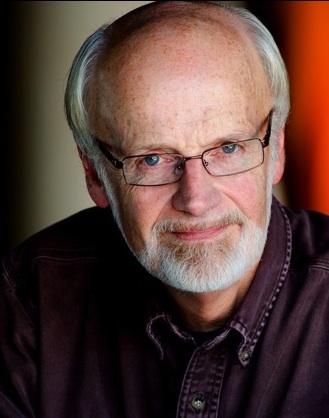
Epiphany by Phillip Hoyle


Stay with me for a minute while I wander through the hallways of old church buildings where I worked and where my choirs sang. The choral year began with me making selections of anthems for each holiday and theme sometimes in consultation with the liturgical calendar although I did not work in a liturgical church. Still, making music in a modified gothic building made me conscious of the long-lasting traditions of church music and of the many reforms that music had undergone. And of course, I liked music from many ages and in many styles.

I learned that the liturgical calendar held some oddities. The year began soon after Thanksgiving, five or six weeks before New Year’s Day. Advent announced the coming Christmas celebration, but thanks to the endless playing of holiday tunes in malls, over airwaves, and at concerts, by the time we got to Christmas we had reached our tolerance. I thought it might be nice to save a three-wise-men song for Epiphany, but what meaning would it have for nice Kansans played out with such music? Christmas was over, the gifts open, and the trees trashed or stored for next year. I realized that for our church I’d have to modify my approach. So Epiphany drifted by without much notice, Epiphany that in western tradition (Roman Catholic and its reforming offspring) pointed to the baptism of Jesus and that in eastern tradition (Orthodox Catholic of various national identities) to the arrival of the Zoroastrian Magicians from the East.

Now stay with me a little longer while I tell you a bit about my religious experience. The Christianity I received came delivered intact. It honored the biblical revelation as being sufficient for all times and assumed that with slight differences in perception the good news was sufficient for all cultures. Yet the form of its understanding relied on an accommodation of an 18 century philosopher! It was systemized in a simple way and taught to children and adults as the truth. I was happy with it, studied the bible, sang the songs, taught its tenets, prayed to the God it taught in the ways it prescribed. That Christianity allowed for individualism—after all it was a 19th century accommodation of the Gospel and the Enlightenment. It assumed that the incarnation of God in Jesus Christ had occurred, that biblical epiphanies, such as the appearance of the risen Lord to the apostle Paul, were true. It assumed that the need for further revelation was over, the age of miracles concluded, and the truth already delivered!

It made sense to me. Its personal emphasis was one of belief as in the confession of faith represented by the public question, “Do you believe that Jesus is the Christ?” and by the time I came along, its existential element was caught up in the idea that you “take Jesus Christ to be your personal savior.” Assumed also was the idea that this belief would make you a better person and that you should pray and go to church regularly.

The system was a reform of the orthodox doctrines of ecclestical authority based on an apostolate, and so forth. It was also a democratic accommodation of church structure and authority that fit in with the American ethos very well. Special gifts of the spirit were generally relegated to the ancient past as no longer needed for faith in the modern age.

The very rational religion seemed official; I found it sufficient for a very rational me. Happily I went on my religious way and into religious work at which I excelled. One could say I had a very rational calling into the ministry of a very rational church.

But non-rational elements kept creeping into my systematic bliss, and some of them seemed blissful to me. Reading Christian theology written by English Dons, I wondered at their preoccupation with classical gods and myths. Why did their inclusion seem so important to them? I didn’t understand, yet in my own mind I heard and treasured the drums and chants of Native American tribes, their stories and folkways, and eventually I came to appreciate how they illuminated my Christian understandings. I spent a lot of time planning religious education events, and affective elements from other religious expressions made way into my designs. I directed choirs in the very rational church and one guest asked if ours was a charismatic church. “Why do you ask?” the senior minister queried. “Well, because of your choir director.” When he told me, I wondered if I seemed to her to be lifted into some kind of charismatic ecstasy. Well, I did get to dance in church.

Please, please stay with me. We’re getting to the story. At a personal level there were those homosexual stories I’ve told you about, experiences that for me seemed to hold so much godly content, that seemed so centrally to define who I was, experiences that revealed personal truths that ran counter to democratic voting-block opinions. My personal truths promised to interrupt the church’s general flow of power and tolerance thus leaving me quite vulnerable. The truth of my personal faith belied the tentative acceptance of gays by the rather liberal faith community I in which worked. Perhaps I was looking for some personal epiphany to redefine who I was in relationship with the now-seeming insufficiently enlightened Christianity I had long accepted. I started separating myself from the religion of my forebears. It wasn’t that I quit being Christian or turned my back on God, but that my Christianity became more personalized, luring me out of the institutional door, so to speak. Now it wasn’t as if homosexuality didn’t exist in the church. That seems obvious enough to our age. But the homosexuality was closeted and often frantic. It was as if everything about religion worked for homosexuals except the institutional rejection of them. That’s got to be a terrifying dilemma. One gay minister had an epiphany and organized what became the Metropolitan Community Church, a special home for LGBTs that eventually began to seek inclusion in the National and World Council of Churches only to be rejected. (Oh well, what’s new?)

I slipped quietly out the back door of the modified gothic buildings and made my way to the big city. I attended the MCC until I got over some of the initial trauma of my leaving both marriage and ministry. Then I began being irked by openly gay clergy. What was that?

Finally I had an epiphany. Mine was not a view of God sitting on the high throne of Heaven, of the resurrected Christ appealing to me in his very human body, but rather, a vision of the homophobia that resided deep within my heart, my body, my mind. It was the homophobia that lurked behind all the nice things I had thought about gay folk and about my gay self. The content of this epiphany—really an emotion-filled insight into myself—was that the culture had kept the upper hand even deep inside me. Slowly through this new vision of myself, I was converting into a self-loving gay human. My homophobia that got focused on a gay church and gay clergy really was my self-hatred that had to be removed, that had to be loved out of me by the God of love that I had long professed, and that had to be loved out of me by the open and costly process of loving men and being loved by them.

Well … I don’t quite know how to move this story to a close, but I do love you people who listen to my stories. I do love you people who so beautifully love gay me. For you are the embodiment of my great religious epiphany.

Denver, 2012


About the Author


Phillip Hoyle lives in Denver and spends his time writing, painting, giving massages, and socializing. His massage practice funds his other activities that keep him busy with groups of writers and artists, and folk with pains. Following thirty-two years in church work, he now focuses on creating beauty and ministering to the clients in his practice. He volunteers at The Center leading “Telling Your Story.”
He also blogs at artandmorebyphilhoyle.blogspot.com

Thursday, February 21, 2013

Epiphany by Peg


     Life is an epiphany.


     Beginning with a transition from total dependence for all of our needs, secure and warm, protected and nourished, oblivious of everything beyond the walls of our mother’s womb.  Forces beyond our control begin to squeeze and push, in a while we enter a completely different dimension.  Suddenly we are now separate, an individual and well designed for this new experience.


     When we die, what new dimension will we enter?  What epiphany will that turn out to be?  That answer lies far beyond our understanding.  Some have certainty, others don’t, in my mind I’ll just wait and see.

     I see life as Lewis Carroll wrote, “As through a looking glass.” Picture a window in a wall; from inside, the view is very different from the view observed from outside the glass.  We can interpret the same scene in quite different ways.  Looking in we might see a place of comfort, safety, and security in everything being known and predictable.  To another’s perspective that scene might look confining, stifling and boring.

     The glass has no opinion of it’s own, it doesn’t care.

     From the other side of the glass looking out, one might see danger, uncertainty and insecurity.  To another it calls for exploration and discovery, and perhaps a strong need to experience complete uncertainty.  What each perceives is his or her own personal choice, we alone decide.  It’s our choice; we may experience peace achieved through reasoned negotiation, or war driven by greed and the desire for supremacy.  Life is a series of choices.  All are decided by our own or collective needs and wants.
 
     The glass has no preference it is just there.
 
     The glass is in it’s own dimension, existing both inside and outside at the same time.  If it had eyes it could see both ways at once, if it had a mind it could know every thought produced by each observation.

     The glass doesn’t care what we see or do with the view.  In truth, the glass doesn’t see anything, it doesn’t feel anything or think, it is just there.  It has no preference if the scene is peaceful or a battlefield, is the weather calm or stormy, is it day or night.

     The glass doesn’t care.

     My epiphany?  Long ago I was taught that the glass was there and did care. I believed that the window provided the scenes for us, put there to test us and decide our fates.

     I have since then made my own choice by believing that the window that guides us is a myth.  I am not directed by dogma and I decide myself how to interpret the scenes.  I understood that I can decide my own destiny, that others beliefs and opinions are theirs and my life is mine alone.  If someone has some difficulty with that, they have the problem not me.

     There is no glass there to care. 

     Someone long ago decided otherwise, he believed the glass was there, did care and since he had that belief, he also believed it needed a name; and he called it …  God.


About the Author


I was born and raised in Denver Colorado and I have a divided history, I went to school, learned a trade, served in the military, married and fathered two sons. And I am Trans; I transitioned in 1986 after being fired for “not fitting in to their program”. 18 years ago I fulfilled my lifelong need to shed the package and become female. I continued working in my trade until retiring in 2006. I have been active in PFLAG Denver and served five years on the board of directors, two years as President of our chapter. Living now as a woman has let me be who I always knew I was and I am genuinely happy.


Friday, October 26, 2012

Epiphany by Gillian


I have been fortunate enough to have several epiphanies in my life. None has taught me anything new, but simply emblazoned on my consciousness what my sub-conscious already knew.  For that reason they have a certain comic aspect. In retrospect I always envision myself at these moments as a comic strip character, slapping my forehead while a starburst leaps from my head containing those immortal words:  “Well, duh!”

The time and place of these revelations is burned in my brain the way those of our generation all remember where we were when Kennedy was shot.

I don’t think I could say I have ever had a huge epiphanic (can it be an adjective?) moment, but rather several little epiphanettes.

I was nine years old when I had my first “well, duh!” moment.

I was in church on Christmas Eve, surrounded by friends, neighbors and family lustily belting out the traditional tried-and-true carols. Even at nine I could sing them all with little attention and meanwhile was surveying the obligatory stable and manger set piece reposing on a rickety table before the old stone font. The nativity scene had been hand carved sometime doubtless during Queen Victoria’s reign and was dutifully dusted off for a few days every Christmas season. Eyeing the Baby Jesus’ tarnished wire hallow it came upon me.

Now, given the time and place one might well expect a Visitation from Christ, but I fear it was more from the Antichrist.

This is just a load of codswallop,”  came to me in a blinding flash.  I don’t need any of it. I will find my own way to God in my own time and my own space and the last thing I need is interference from this mumbling, bumbling old bishop.”

And here endeth my participation in organized religion.

I loved my college years. They were probably the happiest days of my life, until now that is; now is the best ever, but that’s another story. Those happy days were marred by only one thing; this man/woman business. I had no interest in any of it.  But I played my part and went on dates and petted in dark corners and hated it all.

Then suddenly, hiking beside a trickling stream on a purple hillside one weekend, it hit me  I didn’t have to  play the game. Nobody was forcing me. I could simply say “no” to the dates and the dances and the mixers, enjoy my ever widening circle of friends and revel in my new learning. That was what I was there for after all.

“Well, duh!”

I had just let the letter slip through the slot of one of those very British bright red mailboxes. The rain poured down its shiny red sides as my wet hair dripped into my eyes and I wriggled cold toes in soggy shoes.

Why had I mailed that application? I didn’t even want the job. But in a Britain still suffering from post war austerity there were not many jobs to chose from. I had graduated from college and left that particular bubble of unreality, so with wet feet now firmly on wet ground, I had to do something.

Standing staring at that dripping mailbox, all was suddenly illuminated.  I didn’t have to stay here, in this place where the future looked as gray and bleak as the weather. I was young and fit and fairly intelligent, with my shiny new degree in my back pocket I could go anywhere, do anything.   I was free.

“Well, duh!”

I loved my new job at IBM, but I had taken it for the sole purpose of saving enough money for the airfare back to Britain. After all, I had only left home for a year or so, just to see something of the world before settling down to a career and, I supposed, a family. I hadn’t emigrated. That rang too much of finality, of no return; of stinking ships’ holds and Ellis Island.

After only three months with IBM I had enough money for the fare. But if I stayed just a little longer ….

And then it was summer, and the sun shone and the mountains were beautiful, so why rush home to the cold rain of an English summer?  And then it was Fall, and the aspen trees glowed …..And I was driving down North Wadsworth one day, through the peaceful farming country that still existed in those days, and it came just like a flash of dazzling light. (Apparently epiphanies come the road to Denver as well as the road to Damascus!)  I didn’t have to leave Colorado. Ever. There was no rule, no law. I could stay here in this beautiful place where the sun shone 300 days of the year; where I had a job I loved and many wonderful friends.  Forever.

“Well, duh!”

I never should have married. At some level of consciousness I knew that before I married and for every minute that I remained married. But I took those vows seriously, had chosen my path of my own free will, and made it work.  I was happy.

Sitting in the departure lounge of Raleigh-Durham airport, waiting for a delayed flight home from a business trip, I realized with sudden blinding clarity that I didn’t want that plane to turn up. I didn’t want to go home.

When sitting for interminable hours in an airport is preferable to something else, you know there’s a whole lot wrong with the something else.  I was not happy.   Not, at least with the married part of my life.  My stepchildren, whom I would never have abandoned, were essentially grown up.  It was just my husband and I, and I didn’t want to go home.  But I didn’t have to struggle on, making it work. I would not be the first woman to get divorced, and certainly not the last.

“Well, duh!”

Once I had settled comfortably into my divorced skin, I had one last revelation to go. I was sitting on my deck with the cat on my lap and morning coffee in my hand, listening to Anne Murray tapes. Now you may not know this, but many a lesbian of my age was at one time madly in love with old Annie.  I was slowly realizing that the feelings in my groin, not entirely appropriate for six o’clock on a Sunday morning were, even less appropriately, entirely engendered by Ms. Murray.

The lightning struck.

“Oh my God! I’m gay! I’m queer! I’m a lesbian!”

Far from being scary, it was thrilling and uplifting, powerful with promise.

“Oh … my … God!”

Half the people in the world are women and a certain percentage of them feel like I do. And there is nothing in this world to stop me getting out and finding them.

“Oh … my … God!”

“Well, duh!”


About the Author


I was born and raised in England. After graduation from college there, I moved to the U.S. and, having discovered Colorado, never left. I have lived in the Denver-Boulder area since 1965, working for 30 years at IBM. I married, raised four stepchildren, then got divorced after finally, in my forties, accepting myself as a lesbian. I have now been with my wonderful partner Betsy for 25 years.


Thursday, October 25, 2012

Epiphany by Colin Dale


Epiphany, in my American Heritage College Dictionary, has three possible meanings.  I'm interested in only the third of the three.  The first, the Christian holiday tied to the arrival of the Wise Men in Bethlehem.  The second, any revelatory manifestation of God, much like the roadside conversion of St. Paul.  The third--my kind of epiphany--a comprehension or perception of reality by means of a sudden intuitive realization.   One and two are not for me.  I've never been visited by any wandering Wise Men.  Nor have I ever been knocked off my ass on the road to Damascus, or heading anywhere, for that matter.  No, my epiphany--or epiphanies, because we've all had many--have been of the mundane kind: no gods, no midday starbursts, no basso voices from aloft.  In fact, as I sorted through my epiphanies, the one I'll tell you about involves only an ordinary park bench in an ordinary town park near an ordinary mountain stream on an ordinary--although absolutely beautiful--sunny day.

I chose this particular epiphany because it's somewhat topical and reasonably recent.  I could have gone back to some of my earlier epiphanies, back to my gullible college days when I sought the meaning of life, over and over again, and found it, over and over again, back to the days of The Teachings of Don Juan and Zen and the Art of Motorcycle Maintenance, back to when I'd write "How true!" in the margins every time I'd find the meaning of life, over and over again--when, if "How true!" were underlined several times, with maybe three exclamation points, it meant I'd found the Mother of All Meanings of Life.  Instead I'm going to tell you about an epiphany that's more workaday, more down-to-earth, one that many of us, possibly, will relate to.  Why relate to?  Well, besides a park bench and a mountain stream, it also involves a computer.

I should warn you before going any further what follows contains a fairly graphic depiction of the death of a computer, a MacBook laptop.  If you've a queasy stomach, you may want excuse yourself.  If you've chosen to stay--and trusting you're all over 18--here goes . . .

Two years ago I was involved in a readers' theater production of Twelfth Night.  We had rehearsed the play amply and performed it several times in Boulder, so when invited to do a short week's worth of performances in Breckenridge we didn't feel the need to do more than one rehearsal in the Breckenridge theater, plus the performances.  That meant lots of free time.  That amounted to a mountain "vacation:" a few hours' work evenings, but our days completely free.  Cast and crew were offered group lodging, but me--a tenacious loner--I opted for a single room in a downtown hotel.  I had packed as per usual: socks, underwear, toothbrush and paste, too many books--and my Mac laptop.  Now, truth in storytelling requires I say that at this time I was your typical all-American computer user: I traveled knowing in advance I'd have Internet access, and, before checking the HBO lineup or looking for bedbugs, I'd confirm my Internet access.

I found the hotel's guest network, signed on, and . . . and here's where it gets graphic . . . my MacBook began to consume itself.  I knew it felt unusually hot only minutes after startup, like a lasagna dish just out of the microwave.  And then the screen--remember going to movies years ago, before film was digitized? how the cellulose, so-called "safety" stock would catch in the projector's film gate and look like it had caught fire? instead of Cary Grant clinging to the roof's edge, suddenly this almost pretty mosaic of cinnamon brown and honey yellow, the whole screen a wiggling mosaic of melting film?  Well, that was the MacBook screen.  I did what all quick-thinking Mac jockeys do in a situation like that: I rebooted.  Nothing.  Dead screen.  John Cleese would have said my MacBook was now an ex-computer, it had ceased to be, it was bereft of life, it had joined the choir invisible.

The groundwork was now laid for my epiphany.  My MacBook was dead.  And this was Day 1 of a full week away from home.  I'm sure I didn't notice at first, but soon, stretched out on the hotel bed, my rapidly cooling laptop sitting useless on my lap, I noticed I was having a physical response.  Not just an emotional response: I'm cut off for a week!  Not just an intellectual response: How will I keep up with what's going on?  But a physical response: My heartbeat quickened.  My breathing was staccato.  My stomach felt like its bottom trap had sprung open.  I knew it was nuts to have felt this way, but all I could think was, What am I going to do now?

Cue the town park.  Cue the mountain stream.  Enter the park bench.

I did what, had I a living MacBook, would have been unimaginable: I went for a walk.  Outside the hotel I found a serpentine path, the Breckenridge Riverwalk.   A mile or so's stroll led me to the town park and an empty bench.  I sat there looking around, watching the river, watching the passersby.  I was having a good time.  If I'd been paying attention there might have been a basso voice, not from the sky, but from inside: Hey, Ray, isn't this better?  Had it been a Bible moment, it might have been: Hey, Ray, why persecuteth thyself?

By now you all know where this is going, but what the heck.

My epiphany on the park bench did not change me overnight.  A week later, back in Denver, I bought a new MacBook.  And I did set out pretty quick to keep its use in proportion.  Nor did the park bench turn me into a Luddite, sneering at all technology.  Far from it.  My MacBook today--which is I the one I bought after Breckenridge--is first and foremost my typewriter.  Yes, it connects me to the Internet and is my link to email, but I use these features sparingly.  Email, for instance--I limit myself to one hour each morning.  As for web browsing, I try to restrict it to real research, and even then I gang my searches for what usually amounts to an hour's browsing late in the day.  I did, for a time, subscribe to Freedom.com, the lockout service that blocks the Internet, email, the works, for the number of minutes you specify.  I've now weaned myself from Freedom.com.  Now when I'm typing, I just don't look anywhere else.

I realize there's a danger in this tale.  It makes me seem holier than thou.   I don't mean it to sound that way, because that's not how I feel.  I'm not a better person for my laptop epiphany.  I'm not even sure I'm a better person than the me before Breckenridge.  I think I am a happier person.  A more patient person.  A more relaxed person.   And I seem to get a lot more done than the old me ever did.  In a funny way, I feel more free.  I feel freer since Breckenridge to say yes to things as they come along.  I have more focus.  I'm a hell of a lot better at following through on things.  Best of all, I've learned the unbeatable joy of mono-tasking.

So, to wrap it up, we've all had many epiphanies.  Here an epiphany, there an epiphany.  This was a snapshot of one of mine.  It's been fun to go back over this particular epiphany, to see again my MacBook liquefying before my eyes, to re-feel the What-do-I-do-now? panic, to remember the jittery walk to the Breckenridge park, to re-experience the uninstallation of anxiety and to celebrate the reinstallation of a peace of heart, mind, and spirit I'd forgotten was my birthright.

Metaphorically speaking, the Riverwalk was my road to Damascus.  And, metaphorically speaking, I certainly was knocked off my ass.


About the Author


Colin Dale couldn't be happier to be involved again at the Center.  Nearly three decades ago, Colin was both a volunteer and board member with the old Gay and Lesbian Community Center.  Then and since he has been an actor and director in Colorado regional theatre.  Old enough to report his many stage roles as "countless," Colin lists among his favorite Sir Bonington in The Doctor's Dilemma at Germinal Stage, George in Who's Afraid of Virginia Woolf? and Colonel Kincaid in The Oldest Living Graduate, both at RiverTree Theatre, Ralph Nickleby in The Life and Adventures of Nicholas Nickleby with Compass Theatre, and most recently, Grandfather in Ragtime at the Arvada Center.  For the past 17 years, Colin worked as an actor and administrator with Boulder's Colorado Shakespeare Festival.  Largely retired from acting, Colin has shifted his creative energies to writing--plays, travel, and memoir.